Unlocking Efficiency: The Curtain Wall Glass Coating Production Line
Time:
2026-11-17 13:20
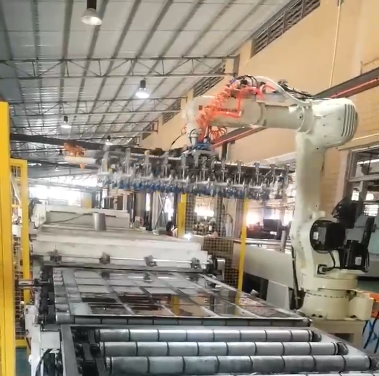
The curtain wall glass coating production line plays a pivotal role in the manufacturing of high-performance glass used in contemporary building facades. These production lines are specifically designed to apply various coatings to glass surfaces, which can significantly improve their functional properties. The coatings can enhance thermal insulation, increase energy efficiency, and provide UV protection, making them essential for meeting modern architectural standards and sustainability goals.
The process begins with the selection of raw glass panels, which are then subjected to thorough cleaning to ensure optimal adhesion of the coatings. After cleaning, the glass panels are transported to the coating station, where various methods such as sputtering, chemical vapor deposition (CVD), or sol-gel processes are employed to apply the desired coatings. Each method has its unique advantages, with considerations such as cost, efficiency, and the specific properties required by the end product influencing the choice of application technique.
Once the coatings are applied, the glass panels typically undergo a curing process, which may involve exposure to heat or ultraviolet light to accelerate the hardening of the coating. This step is crucial as it ensures that the coatings adhere properly and exhibit the desired durability. After curing, the coated glass panels are rigorously tested for quality control, assessing parameters like coating uniformity, adhesion strength, and resistance to environmental factors.
Integration of automation within the curtain wall glass coating production line enhances efficiency and consistency. Automated systems can streamline the entire process, from the initial cleaning of the glass to the application and curing of coatings. This not only increases production speed but also reduces the likelihood of human error, ensuring a higher quality product.
Furthermore, advancements in technology are continuously improving the capabilities of these production lines. Innovations such as machine learning and artificial intelligence are being leveraged to optimize production parameters and predict maintenance needs, thus minimizing downtime and enhancing overall productivity.
In conclusion, the curtain wall glass coating production line represents a sophisticated amalgamation of technology and design, ensuring that modern buildings not only meet aesthetic demands but also adhere to stringent performance criteria. By understanding the intricacies of this production line, professionals in the manufacturing and construction sectors can appreciate the vital role it plays in delivering high-quality architectural solutions that stand the test of time.
Curtain wall glass coating production line
News

PROVIDE YOU WITH THE BEST COST PLAN
Contact Us
Wechat: +86-198 7884 1913
Add: B-11, Jiushan Area, Jindu Industrial Park, Jindu, Gaoyao District, Zhaoqing City, Guangdong, China
Connnect with us!


Website