Enhancing Efficiency in Curtain Wall Glass Coating Production Lines
Time:
2025-12-08 09:10
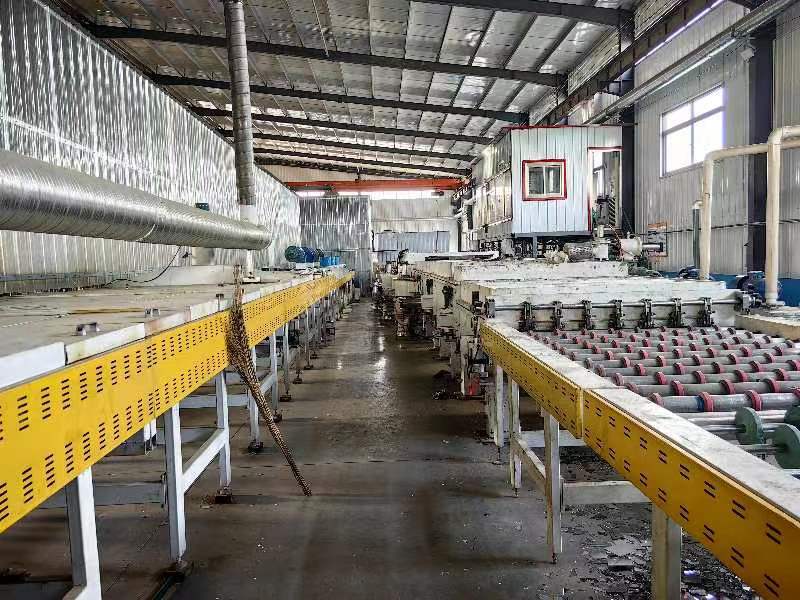
In the realm of manufacturing and processing machinery, the curtain wall glass coating production line plays a crucial role in enhancing the aesthetic appeal and performance characteristics of architectural glass. These specialized production lines are designed to apply protective and functional coatings to glass panels used in modern buildings, contributing not only to their appearance but also to energy efficiency and durability.
The primary function of a curtain wall glass coating production line is to automate the process of applying various types of coatings to glass surfaces. These coatings can include low-emissivity (Low-E) coatings, anti-reflective coatings, and self-cleaning coatings, each serving distinct purposes. Low-E coatings, for instance, help to reduce heat transfer, thereby improving energy efficiency in buildings. On the other hand, anti-reflective coatings enhance visibility and transparency, making them ideal for showcase windows and facades.
A typical curtain wall glass coating production line consists of several key components: pre-treatment stations, coating application systems, curing units, and quality inspection stations. The pre-treatment phase is vital, as it prepares the glass surface to ensure optimal adhesion of the coatings. This may involve cleaning the glass with solvents or employing plasma treatment technologies to enhance surface properties.
The coating application process can utilize different methods, including vacuum deposition, sputtering, or spray coating. Each method has its advantages and is chosen based on the specific type of coating being applied. For instance, vacuum deposition is often preferred for Low-E coatings due to its ability to produce uniform and thin layers that significantly enhance thermal performance.
After the glass has been coated, the curing process is essential for ensuring that the coatings adhere properly and achieve their desired properties. This can involve the use of UV light, heat, or chemical curing techniques, depending on the type of coating applied. Once cured, the glass panels are subjected to rigorous quality inspection to assess their performance characteristics, such as adhesion strength, optical clarity, and resistance to environmental factors.
Ultimately, investing in an efficient curtain wall glass coating production line is crucial for manufacturers aiming to meet the growing demand for high-performance architectural glass. By streamlining processes and incorporating advanced technology, these production lines not only enhance productivity but also contribute to the overall quality of the finished products. As the construction industry continues to evolve, the importance of innovative coating solutions becomes increasingly evident, making curtain wall glass coating production lines a vital component in the manufacturing landscape.
The primary function of a curtain wall glass coating production line is to automate the process of applying various types of coatings to glass surfaces. These coatings can include low-emissivity (Low-E) coatings, anti-reflective coatings, and self-cleaning coatings, each serving distinct purposes. Low-E coatings, for instance, help to reduce heat transfer, thereby improving energy efficiency in buildings. On the other hand, anti-reflective coatings enhance visibility and transparency, making them ideal for showcase windows and facades.
A typical curtain wall glass coating production line consists of several key components: pre-treatment stations, coating application systems, curing units, and quality inspection stations. The pre-treatment phase is vital, as it prepares the glass surface to ensure optimal adhesion of the coatings. This may involve cleaning the glass with solvents or employing plasma treatment technologies to enhance surface properties.
The coating application process can utilize different methods, including vacuum deposition, sputtering, or spray coating. Each method has its advantages and is chosen based on the specific type of coating being applied. For instance, vacuum deposition is often preferred for Low-E coatings due to its ability to produce uniform and thin layers that significantly enhance thermal performance.
After the glass has been coated, the curing process is essential for ensuring that the coatings adhere properly and achieve their desired properties. This can involve the use of UV light, heat, or chemical curing techniques, depending on the type of coating applied. Once cured, the glass panels are subjected to rigorous quality inspection to assess their performance characteristics, such as adhesion strength, optical clarity, and resistance to environmental factors.
Ultimately, investing in an efficient curtain wall glass coating production line is crucial for manufacturers aiming to meet the growing demand for high-performance architectural glass. By streamlining processes and incorporating advanced technology, these production lines not only enhance productivity but also contribute to the overall quality of the finished products. As the construction industry continues to evolve, the importance of innovative coating solutions becomes increasingly evident, making curtain wall glass coating production lines a vital component in the manufacturing landscape.
Curtain wall glass coating production line
News
2026-09-28

PROVIDE YOU WITH THE BEST COST PLAN
Contact Us
Wechat: +86-198 7884 1913
Add: B-11, Jiushan Area, Jindu Industrial Park, Jindu, Gaoyao District, Zhaoqing City, Guangdong, China
Connnect with us!


Website